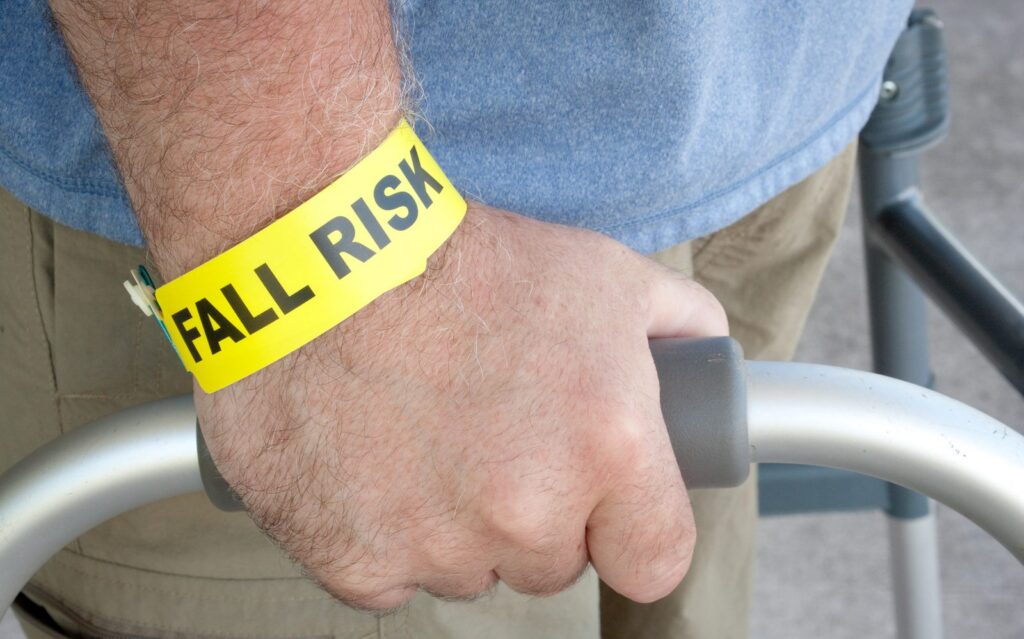
According to the Centers for Disease Control and Prevention (CDC), the chances of your aging relative falling this year is one out of four. And, if they’ve fallen in the past, their chances of falling again are even greater.
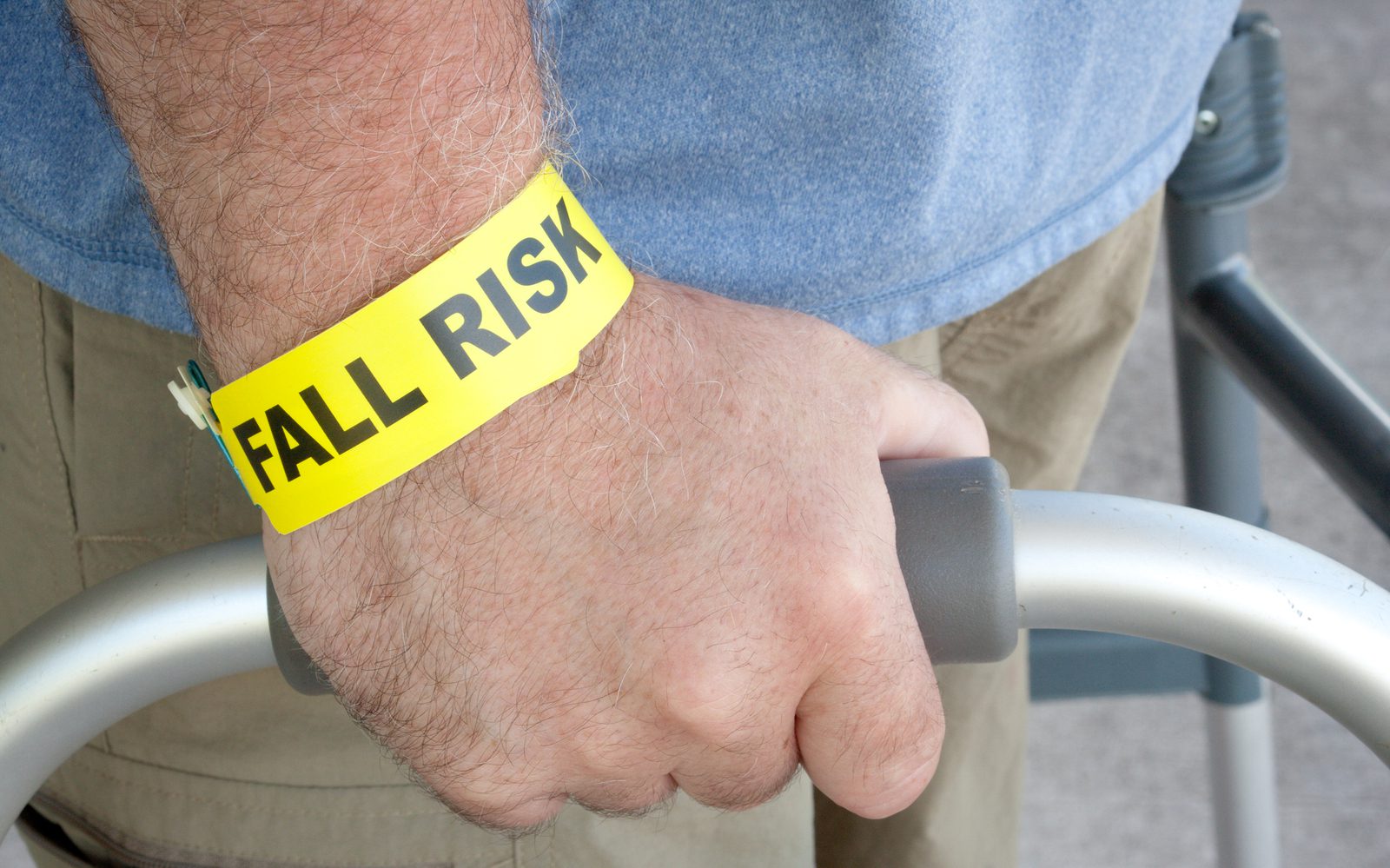
What Can Happen in a Fall?
While some falls may not cause more than a bruise, about one in five results in a serious injury. Being injured can make everyday life more difficult for older adults or even result in long-term disability.
Some of the things that can happen when a senior falls are:
- Falling can cause the older adult to break a bone, such as in their wrist, arm, leg, or hip. Around 300,000 seniors are hospitalized because of a broken hip each year, 95 percent of which are caused by falling.
- Falls are the number one cause of traumatic brain injuries. A head injury can be especially dangerous to seniors who are taking blood thinners or certain other kinds of medications.
- Falling once causes a fear of falling in many older adults. This can cause them to become less active, which makes them weaker and even more likely to fall.
How to Prevent Falls
There are many things that can be done to reduce the risk of your older family member falling.
Some ways to prevent falls are:
- Have a doctor evaluate the senior’s risk of falling and the things they can do to lessen the risk.
- Reduce clutter in the home that could cause them to trip, such as stacks of old magazines or newspapers.
- Secure or remove loose area rugs that could slip and cause a fall.
- Add grab bars to the bathroom near the toilet and shower or bath.
- Increase the lighting in the home so that the senior can see potential trip hazards more easily.
- Help the older adult to remain physically active. Exercise keeps muscles strong and makes the body more flexible.
- Have the older adult’s vision tested. Not being able to see well can cause them to trip over items and uneven surfaces. Also, if the senior wears bifocals, consider getting them some single vision glasses for seeing things far away that the senior can wear when they are doing outside activities. Bifocals can cause a fall because they make things seem closer or farther away than they actually are.
Home care services can also help with fall prevention. Home care services providers can be there to steady your aging relative when they stand up from a chair or when they are walking. Home care services providers can also help to keep the house clean so that there isn’t clutter for the senior to trip over. And, a home care services provider can help the senior to remain more physically active by engaging them in activities, like walking or gardening.
Sources: https://www.nia.nih.gov/health/prevent-falls-and-fractures
https://www.cdc.gov/homeandrecreationalsafety/falls/adultfalls.html