Watching a parent or elderly loved one lose their vision carries an emotional weight of its own. The changes to daily life can be sudden and disruptive, affecting both the senior and the family.
And honestly? You never really know how to support them.
The instinct is to do more and step in fully. But caring for a blind elderly person isn’t about over-helping. When support is centered on safety, autonomy, and quality of life, it protects their dignity. When it isn’t, even well-meaning intentions can chip away at their independence.
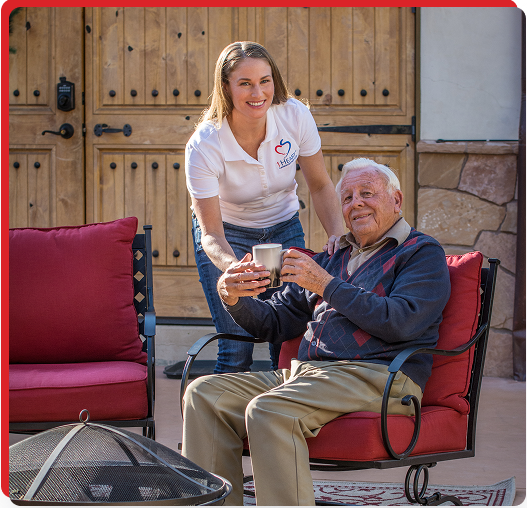
1Heart Caregiver Services explores what happens when an elderly loved one has lost their vision and shares practical caregiving tips.
How Vision Loss Affects Seniors
Vision loss takes a real toll on seniors and their families. It’s essential to understand the unique difficulties faced by a blind elderly loved one. This empowers you to support them in ways that truly help.
Vision Loss Impacts Emotional Stability
When caring for a blind elderly person, remember that vision loss can surface as frustration, grief, and anxiety. Emotions deepen as the senior struggles to adapt.
A CDC study revealed that depression is common in people with vision loss.
Recognizing what your loved one is feeling and offering understanding is just as important as any physical adjustments you make.
Vision Loss Affects Daily Activities and Independence
Everyday tasks that once felt effortless, such as reading, cooking, personal care, and navigating the house, can become difficult or impossible for a blind elderly loved one.
This change can lead to decreased independence. This makes it crucial to find ways to adapt and maintain their autonomy.
Physical Safety Becomes a Concern
Vision loss in older adults raises the risk of falling, and according to the CDC, 1 in 4 Americans over 65 has a fall, the leading cause of injury among older adults.
Research also links visual impairment with higher rates of cardiovascular-specific and all-cause mortality. Medication errors are also disproportionately common among blind elderly individuals.
Caring For a Blind Elderly Person
The risks are layered among visually impaired seniors. Proactive, attentive caregiving preserves safety, dignity, and independence.
Tips for Making the Home Environment Safe
When a loved one loses their vision, once familiar spaces can quickly become unsafe. Cluttered spaces or minor layout changes increase the risk of confusion and falls.
These small adjustments can make a meaningful difference:
- Remove loose rugs, cords, hazards, and clutter from the floors and walkways
- Rearrange furniture for easier navigation, then keep it consistent
- Improve lighting in hallways, bathrooms, and staircases
- Install grab bars in the shower and toilet areas
- Use high-contrast tape on stair edges, door frames, and even appliance controls
- Label medications, appliances, and commonly used items with bump dots or rubber bands
Involve your loved one in these changes. Their input is important in preserving their dignity and shows you respect their independence.
Leverage Assistive Devices and Tools

Many blind elderly individuals still want to live as independently as possible, but when they rely heavily on others for simple activities, their confidence and dignity quietly erode.
The good news is that assistive technology has advanced dramatically, making caring for a blind elderly person easier.
- Talking clocks and watches: reinforce routine and time awareness
- Large-print books, Braille books, and audiobooks: keep reading accessible
- Voice-activated devices and screen readers: Amazon Echo or Google Home support reminders, calls, music, and news
- Accessibility features on phones and computers: Voice Over, TalkBack, and magnifiers improve usability
- GPS and navigation apps: Nearby Explorer and Google Maps can provide voice guidance
How to Communicate with a Blind Elderly Loved One
Some communication habits, such as nodding or gesturing without speaking, can leave a visually impaired loved one feeling confused, excluded, and talked past.
These small adjustments can make interactions respectful, clear, and inclusive:
- Always announce yourself when entering a room without assuming they know who’s there.
- Replace vague directional words, such as “over there” or “that thing,” with specific descriptions.
- Use their name to get their attention before speaking.
- Narrate your actions, for instance, when you’re moving away or leaving the room.
- Don’t shy away from everyday words such as “see”, “look”, or “watch” as overcorrecting yourself can feel awkward for everyone.
- Blind seniors retain agency over their own bodies, so ask before touching, guiding, or assisting.
- Be patient and allow for silence or slower-paced conversation.
Supporting Mental and Emotional Well-Being
Vision loss touches more than eyesight. It reshapes how blind elderly individuals see themselves and engage with daily life. This is why emotional support is just as important as physical adjustments. When caring for a blind elderly person:
- Listen without rushing to fix
- Let them express fear, grief, and frustration freely
- Reassure regularly and validate their feelings
- Try adapting their hobbies and activities rather than abandoning them
- Keep routines consistent to reduce frustration
- Facilitate social connection, in person, by phone, or through community groups
- Involve them in daily decisions such as meals, schedules, and household matters
- Consider sharing humor and inspirational content with them
- Watch for depression signs: withdrawal, hopelessness, disrupted sleep, and not eating.
- Seek professional support. A therapist experienced in vision loss or aging can offer what family caregivers cannot.
How to Encourage Independence Safely
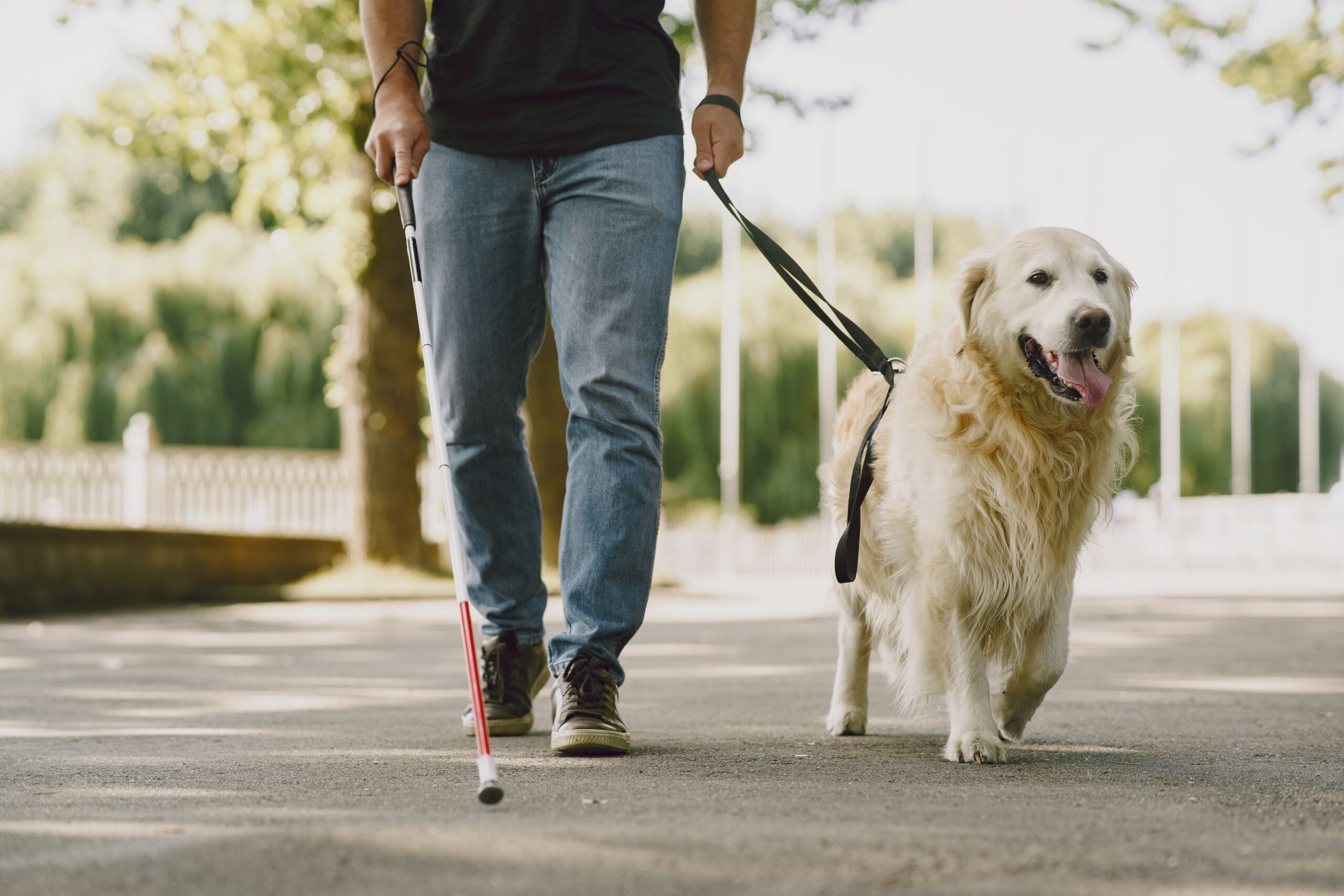
Well-meaning family caregivers often over-assist blind elderly individuals. While it comes from love, doing too much can quietly strip away their confidence and independence. With the right approach, you can support autonomy while reinforcing safety.
When caring for a blind elderly person:
- Allow participation in daily routines, even if tasks are longer
- Keep commonly used items in consistent, easy-to-find locations
- Teach new, challenging tasks rather than taking over
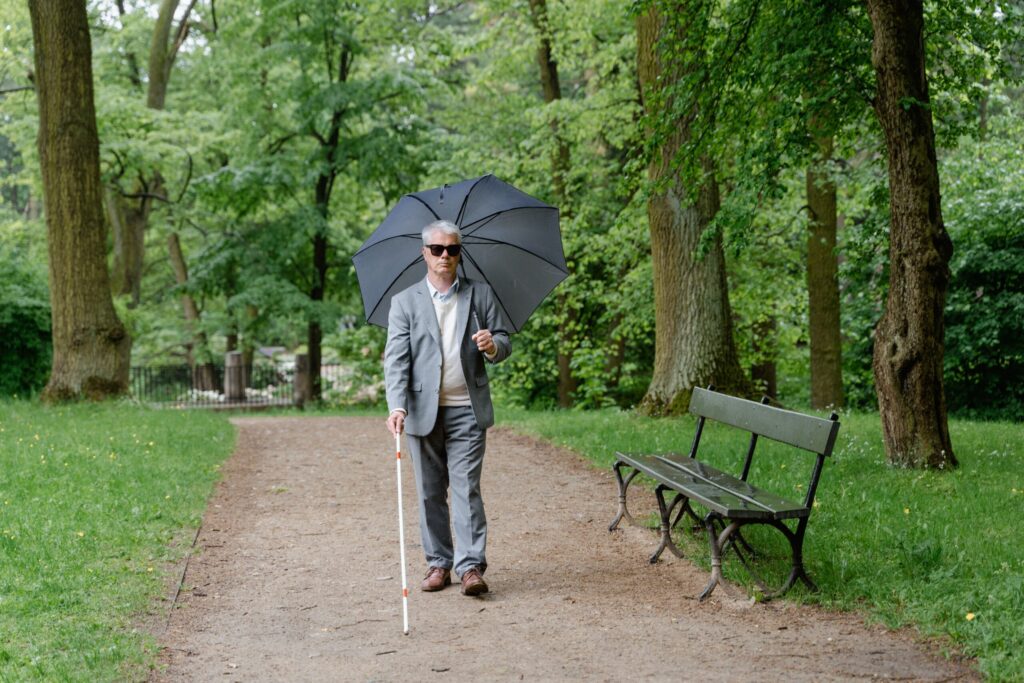
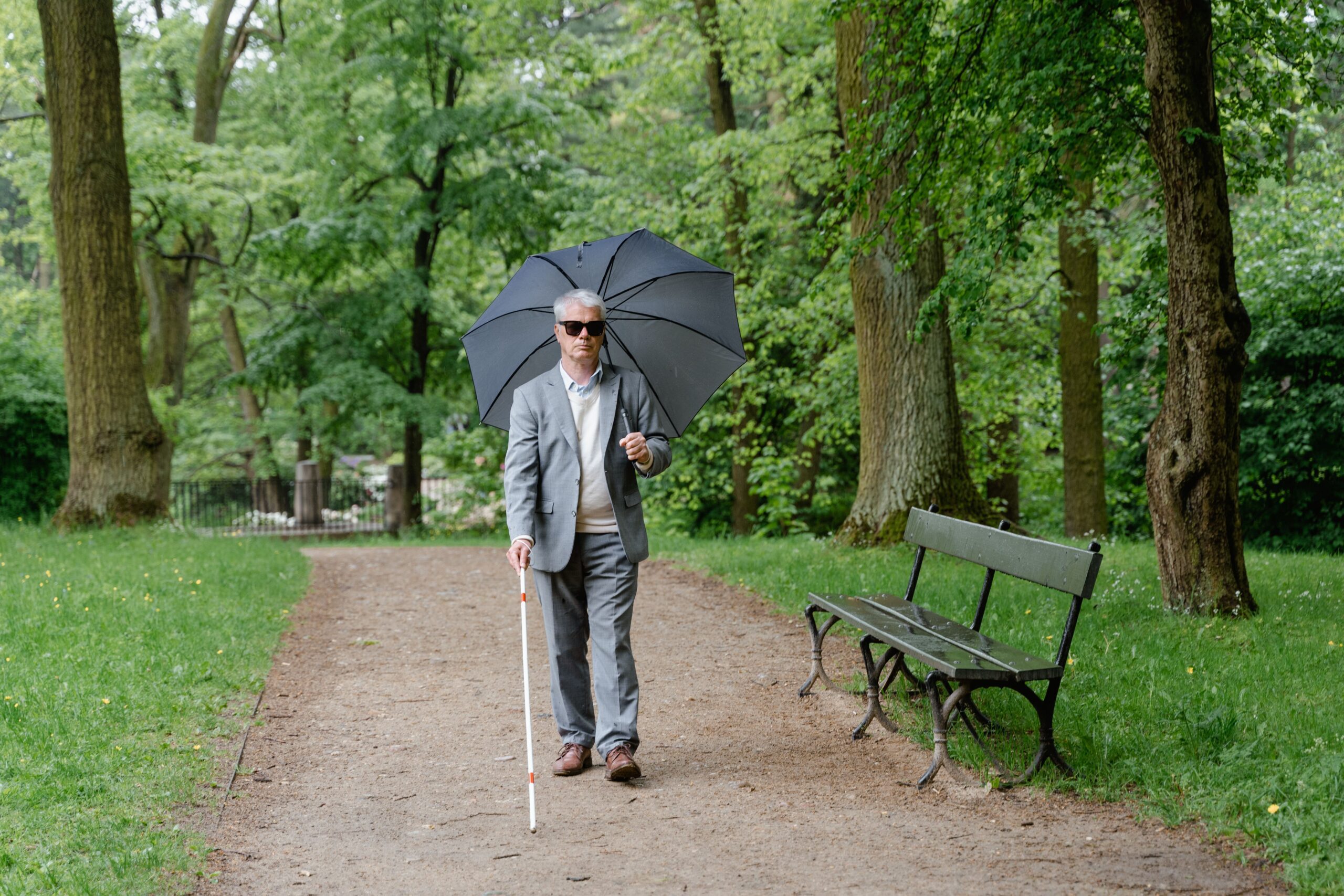
- Use mobility aids, such as a white cane or a guide dog, and consider professional orientation and mobility training
- Connect them with local resources, support groups, and accessible transportation
Supporting the Health of a Blind Elderly Loved One
Vision loss in seniors can stabilize, progress, or interact with conditions such as diabetes, cardiovascular health, and cognitive function in ways that require ongoing medical care.
When caring for a blind elderly person, it’s important to understand that not all vision loss is the same. Whether a loved one has low vision, partial sight, or total blindness shapes the care they need.
Educate yourself about the underlying condition affecting a blind elderly loved one, whether it’s:
This knowledge helps you advocate for the right care and accommodations.
Keep up with regular eye exams since conditions like glaucoma can be managed to slow progression. Additionally, eye treatment options continue to evolve.
To keep your loved one healthy, monitor for any changes in vision, behavior, or overall health.
Get Professional Care
Caring for a blind elderly person requires patience, understanding, and empathy, and can be overwhelming.
An experienced caregiver is better equipped to support your loved one’s independence, safety, and dignity.
1Heart Caregiver Services offers compassionate, personalized home care that makes daily life easy for families. Contact us to learn more about how we can support you and your blind elderly loved one.